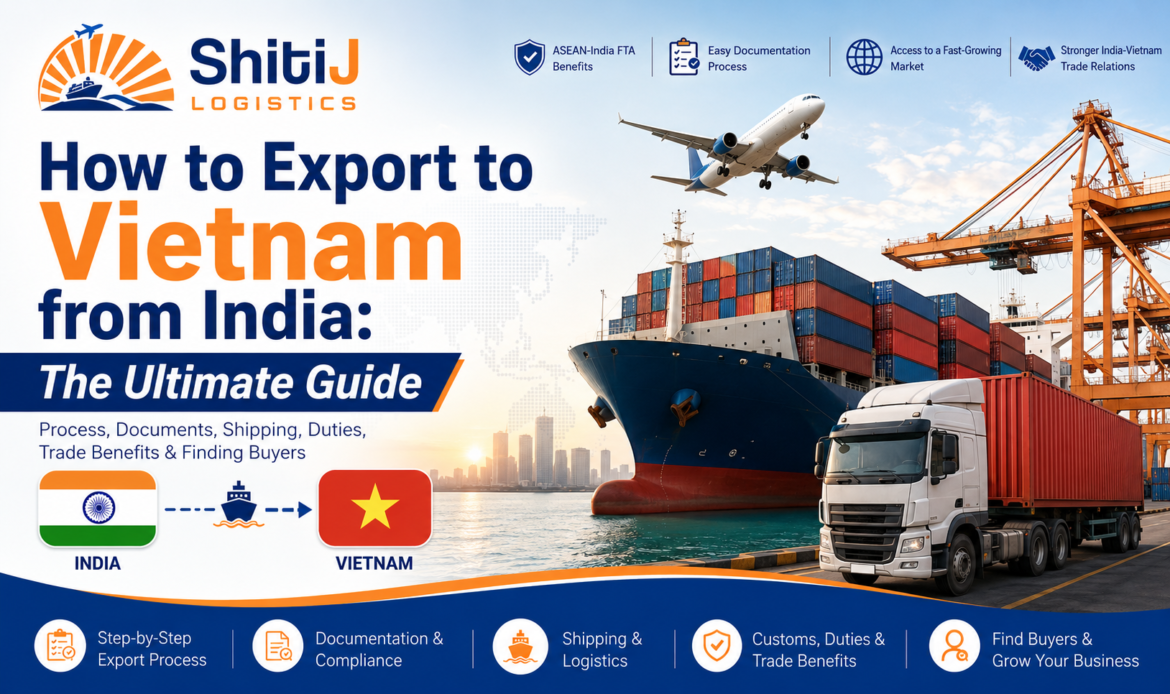
Vietnam has emerged as one of the fastest-growing economies in Asia and is becoming an increasingly important export destination for Indian businesses.
At Shitij Logistics, we have seen strong opportunities in Export to Vietnam from India across pharmaceuticals, chemicals, engineering goods, textiles and agricultural commodities.
However, success requires understanding Vietnam’s import regulations, Ministry of Industry and Trade requirements, customs procedures, documentation standards and trade agreement benefits before shipping goods.
Understanding the Vietnam Market Before Exporting
Overview of Vietnam’s Economy
Vietnam operates a rapidly expanding export-oriented economy supported by manufacturing, electronics, agriculture, construction and consumer sectors. Strong industrial growth and increasing consumer spending continue driving demand for imported products.
Major Industries Driving Import Demand
Manufacturing, electronics, textiles, construction, automotive production, healthcare and food processing industries generate significant import demand. Many Vietnamese manufacturers depend upon imported raw materials, machinery and industrial inputs.
What Vietnam Imports from India
Vietnam imports pharmaceuticals, machinery, chemicals, iron and steel products, cotton, yarn, agricultural commodities and engineering goods from India. These sectors continue supporting growing bilateral trade volumes.
Vietnam’s Fast-Growing Manufacturing Sector
Vietnam has become a major global manufacturing hub. Electronics, textiles, automotive components and industrial production facilities require substantial imports of machinery, raw materials and industrial products.
Consumer Demand Trends in Vietnam
Vietnam’s growing middle class is increasing demand for healthcare products, packaged foods, consumer goods and higher-quality imported products across urban markets.
Market Opportunities for Indian Exporters
Indian exporters can benefit from strong demand for pharmaceuticals, industrial materials, chemicals, engineering products and agricultural commodities supported by competitive pricing and established trade relationships.
Why Vietnam is Becoming a Key Trade Partner for India
Strategic economic cooperation, ASEAN trade agreements and expanding bilateral trade have strengthened commercial ties between India and Vietnam, creating new opportunities for exporters.
Best Products to Export from India to Vietnam
Pharmaceuticals and Healthcare Products
Indian pharmaceutical manufacturers benefit from strong international recognition. Hospitals, distributors and healthcare providers in Vietnam continue sourcing affordable and reliable pharmaceutical products from India.
Chemicals and Industrial Inputs
Vietnam’s industrial growth creates substantial demand for speciality chemicals, manufacturing inputs and industrial materials required across multiple production sectors.
Machinery and Engineering Goods
Industrial machinery, manufacturing equipment and engineering products remain among the most important export opportunities because of Vietnam’s expanding industrial infrastructure.
Iron and Steel Products
Construction and manufacturing activities generate significant demand for iron and steel products. Indian suppliers remain competitive across several industrial categories.
Textiles and Raw Materials
Vietnam’s textile manufacturing sector requires imported fibres, fabrics and production materials. Indian exporters can supply essential inputs supporting garment manufacturing operations.
Cotton and Yarn Exports
Cotton and yarn exports remain important components of India-Vietnam trade. Vietnamese textile producers frequently source raw materials from Indian suppliers.
Automobile Components
Automotive manufacturing and vehicle maintenance sectors create demand for components, spare parts and industrial automotive products sourced internationally.
Plastic Raw Materials
Vietnam’s manufacturing sector consumes substantial volumes of plastic raw materials used across packaging, consumer goods and industrial production activities.
Agricultural Commodities
Agricultural exports including grains, oilseeds and related commodities continue supporting trade opportunities between Indian exporters and Vietnamese buyers.
Food Products and Spices
Indian food products and spices attract demand among distributors, retailers and food processing businesses serving domestic and export markets.
Consumer Goods
Growing consumer spending supports demand for household products, lifestyle goods and consumer merchandise supplied by international manufacturers.
India-Vietnam Trade Agreements and Export Benefits
ASEAN-India Free Trade Agreement (AIFTA)
The ASEAN-India Free Trade Agreement provides tariff advantages for many eligible products. Exporters should verify whether their products qualify for preferential treatment.
Tariff Benefits Available to Indian Exporters
Many products exported under qualifying trade agreement provisions may receive reduced duties, improving competitiveness and market access opportunities.
Rules of Origin Requirements
To obtain tariff benefits, exporters must satisfy Rules of Origin requirements demonstrating that products meet prescribed origin criteria under trade agreements.
Preferential Duty Benefits
Preferential duty treatment can reduce import costs for Vietnamese buyers. This often improves product competitiveness compared with suppliers from non-participating countries.
Certificate of Origin Requirements
Certificates of Origin play a critical role when claiming trade agreement benefits. Incorrect or incomplete documentation can result in loss of tariff advantages.
How Trade Agreements Improve Competitiveness
Lower duties allow importers to reduce landed costs. This creates stronger opportunities for Indian exporters competing within Vietnam’s dynamic marketplace.
Step-by-Step Process to Export to Vietnam from India
Obtain an Import Export Code (IEC)
Every Indian exporter must obtain an Import Export Code from the Directorate General of Foreign Trade before engaging in international trade activities.
Select the Right Product
Product selection should be based on market demand, regulatory requirements, competition levels and commercial viability within Vietnam’s economy.
Verify Product Demand in Vietnam
Exporters should evaluate market demand, buyer requirements and industry trends before investing resources into product development and market expansion.
Check Vietnam Import Regulations
Vietnam regulates various products through customs authorities and specialised ministries. Compliance verification should occur before accepting export orders.
Find Vietnamese Buyers
Potential buyers include importers, distributors, manufacturers, wholesalers and retailers. Proper due diligence helps reduce commercial risks.
Negotiate Pricing and Incoterms
Commercial agreements should clearly define pricing, delivery obligations, payment terms and Incoterms to minimise misunderstandings during trade transactions.
Prepare Export Documentation
Accurate documentation supports customs clearance and compliance. Errors frequently lead to shipment delays and additional administrative costs.
Arrange Freight and Logistics
Transportation planning should consider shipment size, cargo characteristics, transit times and delivery requirements before booking freight services.
Complete Customs Formalities
Both exporters and importers must satisfy customs requirements and regulatory obligations before cargo can be released for commercial use.
Deliver Cargo to Vietnam
Successful delivery requires coordination between exporters, freight providers, customs representatives and importers throughout the supply chain.
Documents Required to Export to Vietnam
Commercial Invoice
The commercial invoice provides details regarding products, values, transaction terms and parties involved in the export transaction.
Packing List
Packing lists describe cargo contents, packaging methods, dimensions and weights used throughout transportation and customs procedures.
Bill of Lading or Air Waybill
Transport documents serve as proof of shipment and provide essential information for cargo tracking and customs processing.
Certificate of Origin
Certificates of Origin may be required to claim preferential tariff treatment under applicable trade agreements and customs regulations.
Export Declaration Documents
Export declarations support regulatory compliance and allow authorities to monitor international trade activities conducted by exporters.
Product-Specific Certificates
Certain products require specialised certificates demonstrating compliance with safety, quality or regulatory standards before importation.
Phytosanitary Certificates
Agricultural and plant-based products may require phytosanitary certification confirming compliance with plant health requirements.
Health Certificates
Food products, animal-origin goods and certain regulated products may require health certification from authorised authorities.
Insurance Documents
Insurance documentation confirms cargo protection against transit risks and supports claims procedures where necessary.
Import Licences Where Required
Some regulated products require import licences before entry into Vietnam. Exporters should verify requirements before shipment.
Vietnam Import Regulations Every Exporter Must Know
Vietnam Customs Regulations
Vietnam Customs administers import procedures, customs declarations, valuation requirements and compliance obligations affecting imported products entering the country.
Ministry of Industry and Trade (MOIT) Requirements
MOIT regulates various product categories and trade activities. Certain goods may require approvals, registrations or additional compliance procedures.
Restricted and Prohibited Imports
Vietnam restricts or prohibits specific products including controlled substances, hazardous materials and other regulated goods under national legislation.
Product Registration Requirements
Certain products including healthcare, food and specialised industrial goods may require registration before commercial distribution within Vietnam.
Product Labelling Requirements
Imported products must satisfy Vietnamese labelling regulations. Product information should be accurate, complete and compliant with applicable standards.
Product Quality and Safety Standards
Various products must comply with national technical regulations and quality standards before entering Vietnam’s commercial market.
Industry-Specific Compliance Requirements
Different industries face different compliance obligations. Exporters should verify product-specific requirements before manufacturing and shipping goods.
Penalties for Non-Compliance
Failure to comply with regulations may result in customs delays, penalties, shipment rejection or additional regulatory enforcement actions.
Customs Clearance Process in Vietnam
How Customs Clearance Works
Vietnam Customs reviews shipment documents, product classifications, customs values and regulatory requirements before goods are released into the domestic market. Proper documentation significantly reduces delays and compliance complications.
Import Declaration Procedures
Import declarations are submitted through Vietnam’s customs system by authorised importers or customs representatives. Accurate declarations help ensure smooth processing and regulatory compliance.
Customs Valuation Process
Vietnam Customs determines customs value using recognised valuation methods. Product values, freight costs and insurance expenses may influence duty and tax calculations.
Duties and Taxes on Imports
Imported goods may attract import duties, Value Added Tax and product-specific taxes. Rates vary according to tariff classifications and applicable regulations.
Customs Inspections
Customs authorities may inspect cargo to verify declarations, product descriptions and compliance requirements. Inspection frequency depends upon risk assessment and product categories.
Common Customs Delays
Documentation inconsistencies, incorrect tariff classifications, missing certificates and valuation disputes represent common causes of customs clearance delays.
Tips for Faster Customs Clearance
Exporters should ensure documentation accuracy, verify compliance requirements and coordinate closely with Vietnamese importers before shipment arrival.
Shipping from India to Vietnam
Major Ports in Vietnam for Imports
Vietnam operates several major international ports supporting containerised cargo, bulk shipments and industrial imports. Port selection depends upon cargo destination and commercial requirements.
Port of Ho Chi Minh City
Ho Chi Minh City serves southern Vietnam and handles substantial import volumes supporting manufacturing, retail and industrial sectors.
Port of Hai Phong
Hai Phong is northern Vietnam’s primary commercial port and supports imports serving major industrial and manufacturing regions.
Port of Da Nang
Da Nang provides strategic access to central Vietnam and supports growing commercial and industrial activities throughout the region.
Cai Mep Port
Cai Mep is an important deep-water port capable of handling large international container vessels and supporting global trade routes.
Quy Nhon Port
Quy Nhon serves central coastal regions and supports imports for manufacturing, construction and commercial sectors.
Sea Freight Options
Sea freight remains the most economical option for commercial cargo shipments. Most exporters utilise containerised sea freight for regular trade activities.
Air Freight Options
Air freight is suitable for urgent, high-value and time-sensitive products requiring faster delivery schedules than ocean transportation.
FCL Container Shipping
Full Container Load shipping provides dedicated container space and greater control over cargo handling, security and transit management.
LCL Container Shipping
Less than Container Load shipping allows smaller exporters to share container space, reducing transportation costs for lower-volume shipments.
Transit Times from India to Vietnam
Transit times depend upon origin ports, carrier schedules, routing arrangements and destination ports within Vietnam’s logistics network.
Factors Affecting Freight Costs
Freight costs vary according to shipment size, weight, transportation mode, fuel prices, seasonality and market conditions.
Choosing the Right Shipping Method
Exporters should evaluate cost, urgency, cargo characteristics and buyer expectations when selecting transportation methods for Vietnam-bound shipments.
Duties, Taxes and Import Costs in Vietnam
Import Duty Structure
Import duty rates vary according to product classifications and applicable trade agreements. Proper tariff classification remains essential for accurate costing.
Value Added Tax (VAT)
Vietnam generally applies Value Added Tax on imported products. Importers must include VAT when calculating landed costs.
Special Consumption Tax
Certain products may attract Special Consumption Tax depending upon their classification and regulatory treatment under Vietnamese law.
Customs Valuation Rules
Customs authorities apply valuation principles to determine duties and taxes payable on imported goods entering Vietnam.
Landed Cost Calculation
Landed cost includes product value, freight charges, insurance expenses, duties, taxes and local handling costs incurred before delivery.
Duty Benefits Under Trade Agreements
Eligible products may receive tariff preferences under ASEAN-related trade arrangements when origin requirements are properly satisfied.
Payment Methods and Export Risk Management
Letter of Credit (LC)
Letters of Credit provide security for both buyers and sellers by involving banks in the payment process.
Advance Payment
Advance payment minimises financial risk because exporters receive payment before goods are dispatched internationally.
Documentary Collection
Documentary collection offers a balance between cost and security while facilitating international trade transactions through banking channels.
Open Account Transactions
Open account arrangements should generally be reserved for trusted buyers with established commercial relationships and payment histories.
Export Credit Insurance
Export credit insurance protects businesses against buyer defaults and certain commercial risks associated with international trade.
Managing Currency Risks
Exchange rate fluctuations can affect profitability. Exporters should monitor currency exposure and implement suitable risk management measures.
Protecting Against Payment Fraud
Buyer verification, secure payment terms and strong contractual agreements reduce exposure to payment fraud and commercial disputes.
How to Find Buyers in Vietnam
Vietnamese Importers and Distributors
Importers and distributors provide direct access to local markets and often serve as long-term commercial partners.
Trade Shows and Industry Exhibitions
Industry events provide opportunities to meet buyers, distributors and procurement professionals seeking international suppliers.
B2B Marketplaces
Business-to-business platforms help exporters identify potential customers and explore new market opportunities within Vietnam.
Chambers of Commerce
Trade associations and chambers of commerce facilitate networking and provide introductions to local businesses and industry participants.
Export Promotion Councils
Indian export councils assist businesses through trade promotion activities, market intelligence and buyer development initiatives.
LinkedIn and Business Networking
Professional networking platforms allow exporters to connect directly with decision-makers and procurement professionals in Vietnam.
Working with Local Agents
Local representatives understand market conditions and can support business development activities within Vietnam’s commercial sectors.
Building Long-Term Buyer Relationships
Consistent quality, reliable communication and dependable delivery performance help establish sustainable buyer relationships.
Common Challenges When Exporting to Vietnam
Customs Documentation Errors
Incorrect documentation frequently causes delays, inspections and additional administrative costs during customs clearance procedures.
Product Registration Delays
Certain regulated products require approvals before market entry. Registration delays may affect shipment schedules and sales activities.
Import Licensing Issues
Products requiring import licences may experience delays if approvals are not obtained before shipment.
Payment Collection Risks
Delayed payments and commercial disputes can affect profitability. Proper risk management remains essential for international trade.
Language and Communication Barriers
Language differences occasionally create misunderstandings during negotiations, documentation preparation and customer relationship management.
Logistics Challenges
Transportation coordination, delivery schedules and infrastructure limitations may affect cargo movement within Vietnam.
Product Compliance Issues
Failure to meet regulatory standards may result in shipment delays, product rejection or additional compliance requirements.
Cost of Exporting to Vietnam from India
Product Cost
Manufacturing expenses, compliance obligations and packaging requirements influence final export pricing strategies.
Packaging Cost
Export packaging must protect cargo while satisfying transportation and regulatory requirements throughout the supply chain.
Freight Charges
Freight charges depend upon shipment volume, transportation mode, routing and prevailing market conditions.
Marine Insurance
Insurance provides protection against loss or damage during international transportation and logistics operations.
Customs Duties
Import duties contribute significantly to landed costs and should be considered during commercial negotiations.
VAT and Taxes
Taxes applied at importation influence overall product competitiveness and pricing within Vietnam’s market.
Port Charges
Port handling, terminal fees and administrative charges contribute to total logistics expenditure.
Warehousing Costs
Storage expenses may arise before customs clearance or during local distribution activities.
Delivery and Distribution Costs
Final delivery costs depend upon destination location, transportation requirements and distribution arrangements within Vietnam.
Government Resources and Trade Support
Ministry of Industry and Trade (MOIT)
MOIT oversees trade policies, import regulations and commercial activities affecting imported products in Vietnam.
Vietnam Customs Authority
Vietnam Customs administers customs procedures, valuation rules and import compliance requirements.
Vietnam Trade Promotion Agency (VIETRADE)
VIETRADE supports trade development activities and provides information regarding market opportunities and commercial cooperation.
Directorate General of Foreign Trade (DGFT)
DGFT regulates India’s export framework and supports exporters through policy guidance and registration services.
Export Promotion Councils in India
Export councils provide market intelligence, trade promotion programmes and international business development support.
Federation of Indian Export Organisations (FIEO)
FIEO assists exporters through training, trade missions, market intelligence and export development initiatives.
ASEAN-India Trade Resources
ASEAN trade resources help exporters understand tariff benefits, origin requirements and trade agreement provisions.
Tips for First-Time Exporters to Vietnam
Research Vietnam’s Market Thoroughly
Comprehensive research helps identify demand, competition levels and suitable opportunities before entering the market.
Verify Buyers Before Transactions
Always verify buyer credentials, financial stability and commercial reputation before accepting purchase orders.
Understand Trade Agreement Benefits
Understanding tariff benefits can improve competitiveness and reduce costs for Vietnamese importers.
Ensure Product Compliance
Product compliance should be verified before manufacturing and shipment to avoid regulatory complications.
Select Appropriate Shipping Methods
Transportation methods should align with cargo requirements, delivery expectations and budget considerations.
Secure Payments Properly
Appropriate payment terms help reduce financial risks and improve transaction security.
Start with Smaller Shipments
Initial smaller shipments allow exporters to evaluate market response and operational performance.
Build Strong Distribution Networks
Reliable distribution partners improve market reach and long-term business development opportunities.
Looking for the Best Freight Forwarder for Exporting to Vietnam?
Shitij Logistics provides end-to-end logistics support for exporters shipping cargo from India to Vietnam. Our services include freight forwarding, shipment planning, export documentation support, cargo coordination, container management and transportation solutions designed to simplify international trade operations.
Contact us today for Air/Sea Freight Quote for India to Vietnam:
- Call/WhatsApp: +91 92119 62208
- Email us: info@shitijlogistics.com
Conclusion
Successfully exporting to Vietnam requires more than competitive pricing. Businesses must understand Vietnam Customs requirements, Ministry of Industry and Trade regulations, tariff benefits available under trade agreements, documentation requirements and logistics planning. Exporters who prioritise compliance, buyer verification and efficient supply chain management can build sustainable and profitable trade relationships within Vietnam’s rapidly growing economy.
FAQs
What does Vietnam import from India?
Vietnam imports pharmaceuticals, chemicals, machinery, cotton, yarn, iron and steel products, engineering goods and agricultural commodities from India.
What are the best products to export from India to Vietnam?
Pharmaceuticals, chemicals, machinery, cotton, textiles, engineering products, plastics and agricultural commodities remain among the strongest export opportunities.
Is Vietnam a good export market for Indian businesses?
Yes. Vietnam’s growing economy, expanding manufacturing sector and increasing import demand create significant opportunities for Indian exporters.
What documents are required to export to Vietnam?
Commercial invoices, packing lists, transport documents, Certificates of Origin and product-specific certificates are commonly required.
What trade agreements exist between India and Vietnam?
India and Vietnam benefit from ASEAN-related trade agreements that provide tariff preferences for eligible products.
How long does shipping from India to Vietnam take?
Transit times vary according to shipping routes, carrier schedules and destination ports within Vietnam.
What are the major ports in Vietnam?
Ho Chi Minh City, Hai Phong, Da Nang, Cai Mep and Quy Nhon are among Vietnam’s major commercial ports.
What duties and taxes apply to imports in Vietnam?
Imports may attract customs duties, VAT and product-specific taxes depending upon classification and regulations.
How can I find buyers in Vietnam?
Importers, distributors, trade exhibitions, B2B platforms and industry associations provide opportunities to identify buyers.
What payment methods are commonly used in Vietnam?
Letters of Credit, advance payments, documentary collections and negotiated commercial terms are widely used.
What are the common challenges when exporting to Vietnam?
Documentation errors, compliance issues, licensing requirements, payment risks and logistics coordination are common challenges.
Can Indian exporters get tariff benefits in Vietnam?
Yes. Eligible products meeting origin requirements may receive tariff benefits under applicable trade agreements.